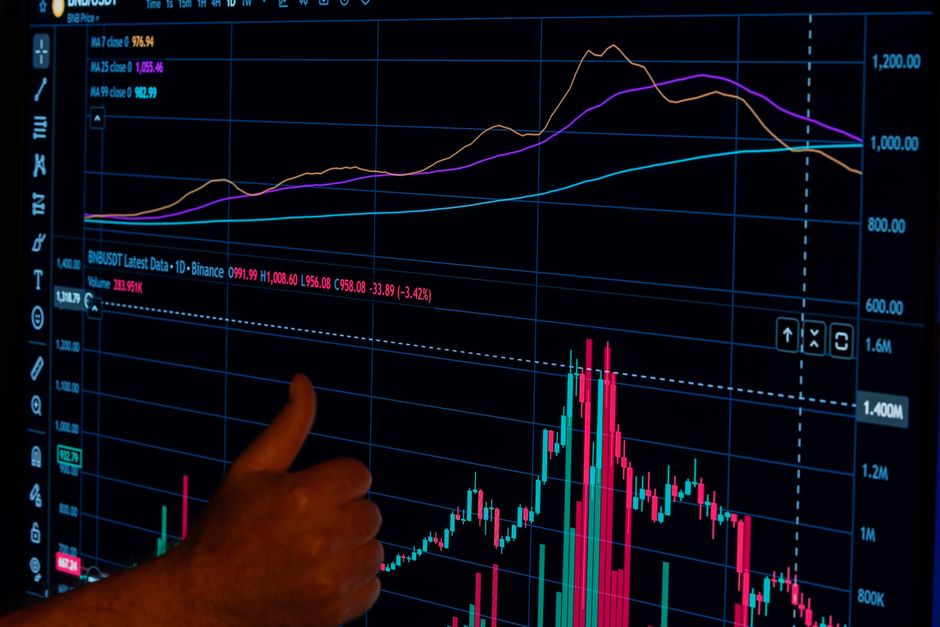
Seoul spent the whole session trying to work out whether the buyback bid still meant anything, and by the close the answer was no. The KOSPI fell 3.99% to 6,562.72, a 273-point drop that erased the previous day's recovery and more, with 735 of 911 listed names finishing lower. Samsung Electronics and SK hynix are still buying their own shares at a pace of roughly 1.6 trillion won a day — and both stocks still fell more than 4%. When corporate demand of that size cannot hold a floor, it usually means the sellers on the other side are not price-sensitive, and today they were not.
The short version: A jump in US Treasury yields and crude oil, driven by renewed US–Iran fighting, triggered heavy foreign and institutional selling in Seoul that overwhelmed record-sized buybacks from Samsung and SK hynix. The KOSPI fell 3.99%; the won, unusually, held firm.
| Instrument | Close (Sept 2) | Change |
|---|---|---|
| KOSPI | 6,562.72 | −3.99% (−273.08 pts) |
| KOSDAQ | 803.98 | −2.10% (−17.27 pts) |
| USD/KRW | 1,368.88 | won +0.35% (dollar lower) |
| Samsung Electronics | ₩250,500 | −4.02% |
| SK hynix | ₩1,613,000 | −4.73% |
What moved the market
The trigger was external and it arrived overnight. Renewed hostilities between the United States and Iran around the Strait of Hormuz — including reports of two oil tankers being struck, one of them South Korean-owned — pushed crude sharply higher and sent money into the dollar. WTI for October delivery rose more than 5% to clear $91 a barrel. The US 10-year Treasury yield pushed above 4.80%, its highest in roughly a year and a half, and futures markets moved to price a better-than-even chance of a Federal Reserve rate increase this month.
That combination — higher oil, higher long rates, live geopolitical risk — is close to a worst case for a market like Korea's. The KOSPI is up enormously this year on an AI-driven memory cycle whose valuation case rests on cheap long-term money and sustained hyperscaler capital spending. Push the discount rate up and add an oil-driven inflation shock, and the most crowded trade in the index becomes the easiest place to take profits.
The flow data tells the story plainly. On Wednesday alone, foreign investors sold a net 1.909 trillion won and institutions a net 2.043 trillion won, while retail investors absorbed 2.302 trillion won. Zoom out and the pattern is starker: since SK hynix began its buyback on August 20, foreigners and institutions have together sold about 13.9 trillion won — an amount equal to roughly 92% of the net buying done by corporate entities over the same stretch. In other words, the buyback programme has functioned less as a floor than as an exit ramp, offering size to anyone who wanted out of large-cap memory.
A sector-specific headline made it worse. Reports that China's ChangXin Memory Technologies has begun producing small volumes of HBM3E — the fifth-generation high-bandwidth memory that has underpinned the Korean duopoly's pricing power — landed on an already nervous tape. The volumes involved are not commercially meaningful yet. The signal about where competition is heading is what got priced.
Sector by sector
The damage was broad rather than concentrated, which is what distinguishes this from the chip-specific selloffs Seoul has seen earlier this year.
Semiconductors led the decline in market-cap terms, with Samsung down 4.02% and SK hynix down 4.73%, and the pain extended into the holding-company and materials complex — SK Square fell about 7.9%.
Batteries and EV materials were hit hardest of all, with POSCO Future M down roughly 8%. This is the part of the market most exposed to higher discount rates: long-duration growth stories with capital spending front-loaded and cash flows years out.
Shipbuilding and heavy industry, which had been treated for much of the year as a geopolitical beneficiary, sold off with everything else — HD Hyundai Heavy Industries fell about 6.8%, HD Korea Shipbuilding & Offshore Engineering about 6.7%, and HD Hyundai Electric about 7.5%. That is worth noting: on a day driven by conflict headlines, the supposed conflict hedges did not hedge. Positioning had simply become too crowded after a long run.
Financials were the one pocket of relative strength, with Meritz Financial Group up about 3.5% — a reminder that rising rates are not bad news for every balance sheet.
The selling was not unique to Seoul. Japan's Nikkei 225 fell 2.85% and Taiwan's Taiex dropped 1.67%, both markets with heavy technology weightings. But Korea fell further than either, which is the usual pattern: the KOSPI's liquidity and foreign ownership make it a convenient place to reduce Asia-tech exposure quickly.
Foreign appetite is visibly cooling in the offshore vehicles too. Net inflows into the iShares MSCI South Korea ETF (EWY) totalled about $370 million in August, down more than 90% from July's record of roughly $4.8 billion. The leveraged Direxion KORU fund saw net outflows of about $211 million over the month, and the Roundhill Memory ETF — nearly half Samsung and SK hynix by weight — bled about $1.1 billion in the second half of August alone. None of that is a forecast, but it does show the marginal foreign buyer stepping back well before Wednesday's session.
The won and the macro picture
Here is the day's genuine anomaly: the won did not break. USD/KRW finished at 1,368.88, with the won up about 0.35% and sitting close to its firmest level since mid-2025. On a global risk-off day with the dollar bid, a market losing 4% would normally see its currency sold hard alongside it.
The explanation is Korea's trade account, which is currently doing something extraordinary. August exports came in at $98.25 billion, up 68.7% year on year, with semiconductor shipments up 209% to $46.65 billion on AI infrastructure demand. That volume of export earnings generates persistent dollar selling by Korean exporters, and it is currently strong enough to absorb portfolio outflows. Equity investors are leaving; the goods trade is bringing more dollars in than they are taking out.
The macro calendar added its own complication. Statistics released the same morning showed August consumer inflation at 3.1% year on year, up from 2.8% in July though slightly below the 3.2% economists had expected. Core inflation rose to 3.4%, the highest reading since May 2023. That comes a week after the Bank of Korea raised its policy rate to 3.00% in a 6–1 vote — its second consecutive hike, aimed at getting ahead of price pressures generated by the chip boom itself. The BOK has indicated it expects headline inflation to ease in September while underlying pressure persists.
So Korea enters this shock with an unusual mix: a hawkish central bank, an inflation rate above target, a strong currency, a booming export sector, and an equity market that has run a very long way. The oil move complicates the disinflation path the BOK was counting on, since Korea imports essentially all of its crude.
What to watch next
Oil and the Hormuz situation. For Korea this is the dominant variable — it is simultaneously an inflation input, a trade-balance drag, and a shipping-risk factor. A sustained move higher in crude would pressure the current-account surplus that is currently holding the won up.
The US 10-year yield and the September Fed meeting. Rate-hike pricing has moved fast. If long US yields keep climbing, the pressure on high-multiple Asian technology is unlikely to ease, whatever memory demand does.
Whether the buybacks continue at this pace. Samsung and SK hynix have been absorbing enormous supply. The size and duration of those programmes now matters more to the index than almost any earnings datapoint.
CXMT and the HBM competitive picture. Small production volumes are not a near-term revenue threat, but any confirmation of qualification with major customers would be read as a structural change to the memory duopoly.
BOK commentary. With core inflation at a three-year high and an oil shock in progress, the central bank's read on how much of this is temporary will shape rate expectations into the next meeting.
Wednesday was a repricing driven by rates and geopolitics rather than by anything that changed in Korean memory demand — the export numbers, released the day before, were the strongest on record. Whether that distinction holds depends largely on how long crude and US yields stay where they are.
This is market information, not investment advice.